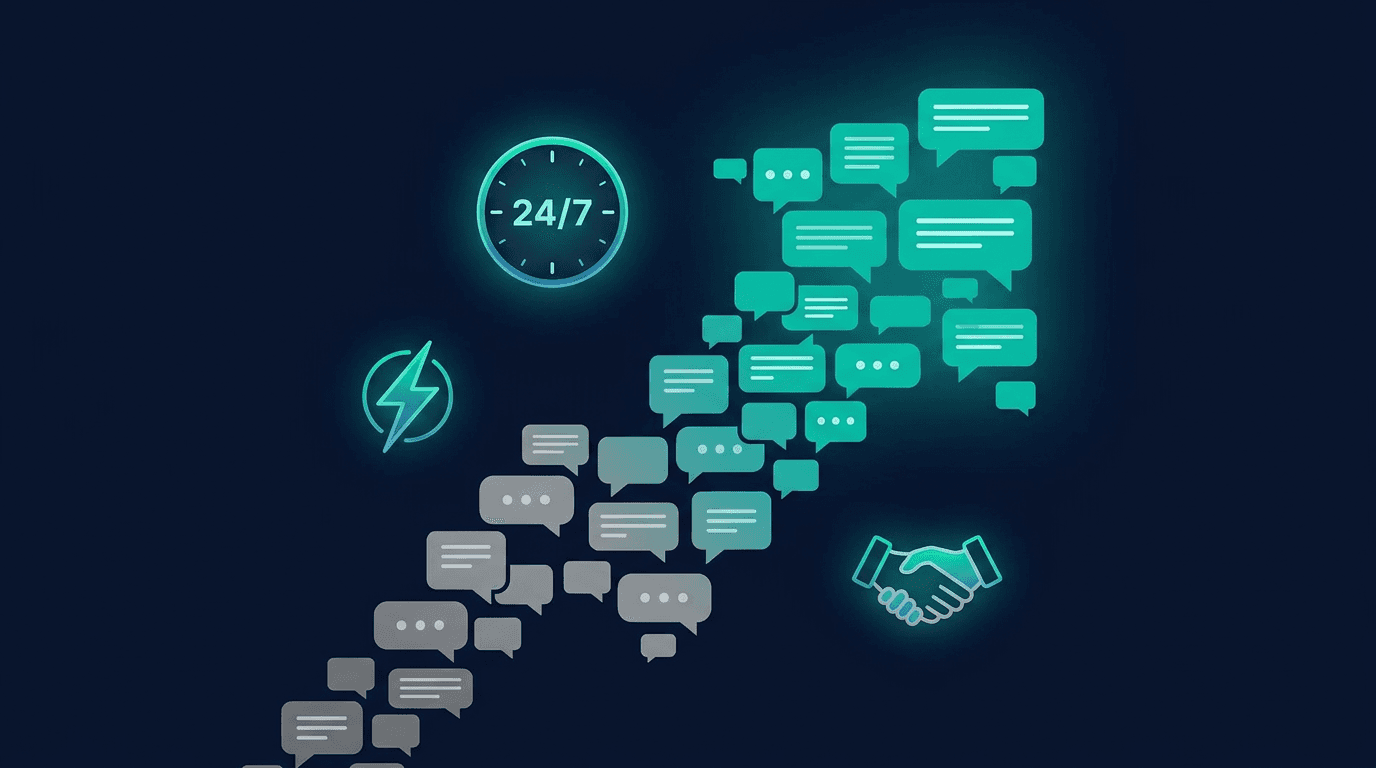
Businesses using AI chatbots see 30-50% fewer support tickets, 24/7 availability without hiring night shifts, and a 12x lower cost per customer interaction compared to human-only support. If you haven't added a chatbot to your website yet, 2026 is the year the math becomes impossible to ignore.
What's changed about customer expectations in 2026?
Three shifts have made AI chatbots essential rather than optional:
- Instant answers are the baseline. Customers who grew up with ChatGPT and voice assistants expect immediate, accurate responses — not "we'll get back to you in 24-48 hours."
- Self-service is preferred. 67% of customers prefer solving their own problem over contacting support, according to Salesforce's 2025 State of Service report.
- Competitors already have chatbots. In 2025, 58% of B2B and 42% of B2C websites deployed some form of AI-powered chat. Not having one puts you at a disadvantage.
The real cost of not having a chatbot
Every support ticket that a chatbot could have handled costs you $3-12 in agent time. If you receive 500 support requests per month and 40% of them are FAQ-type questions, that's 200 conversations you're paying humans to answer when AI could do it better and faster — for about $20 total instead of $1,200.
Beyond direct cost savings, you're also losing potential customers who land on your website outside business hours and leave without getting answers. A chatbot catches those visitors at their most interested moment.
5 concrete ways a chatbot helps your bottom line
- Deflect repetitive tickets. Questions like "What are your hours?", "How do I reset my password?", and "What's your return policy?" are handled instantly by AI. This frees your human agents for complex issues that actually need them. Learn more in our guide on reducing support tickets with AI.
- Qualify leads automatically. A chatbot can ask visitors what they need, collect their email, and route hot leads to your sales team — all while you sleep.
- Reduce cart abandonment. For e-commerce sites, answering product questions in real-time during the buying process reduces abandonment by 15-25%.
- Onboard new users faster. SaaS companies use chatbots to guide new signups through setup, answer feature questions, and surface relevant documentation at the right moment.
- Collect feedback at scale. A chatbot can ask follow-up satisfaction questions naturally at the end of every interaction, giving you data that surveys never capture.
But won't customers hate talking to a bot?
This is the most common objection, and it was valid in 2020. It's not valid in 2026.
The old rule-based bots that forced users through rigid decision trees were genuinely frustrating. Modern LLM-powered chatbots have natural conversations. They understand context, handle follow-up questions, and provide nuanced answers.
Pro tip
Be transparent that it's an AI. Customers actually prefer knowing they're talking to a bot when it means they get an instant answer. What they hate is being tricked into thinking it's a human when it clearly isn't.
The key is having a smooth handoff to human agents for questions the AI can't handle. The best chatbot experiences are hybrid — AI handles the 70-80% of simple queries, humans handle the rest.
How to pick the right chatbot for your business
Not all chatbot platforms are equal. Here's what to look for:
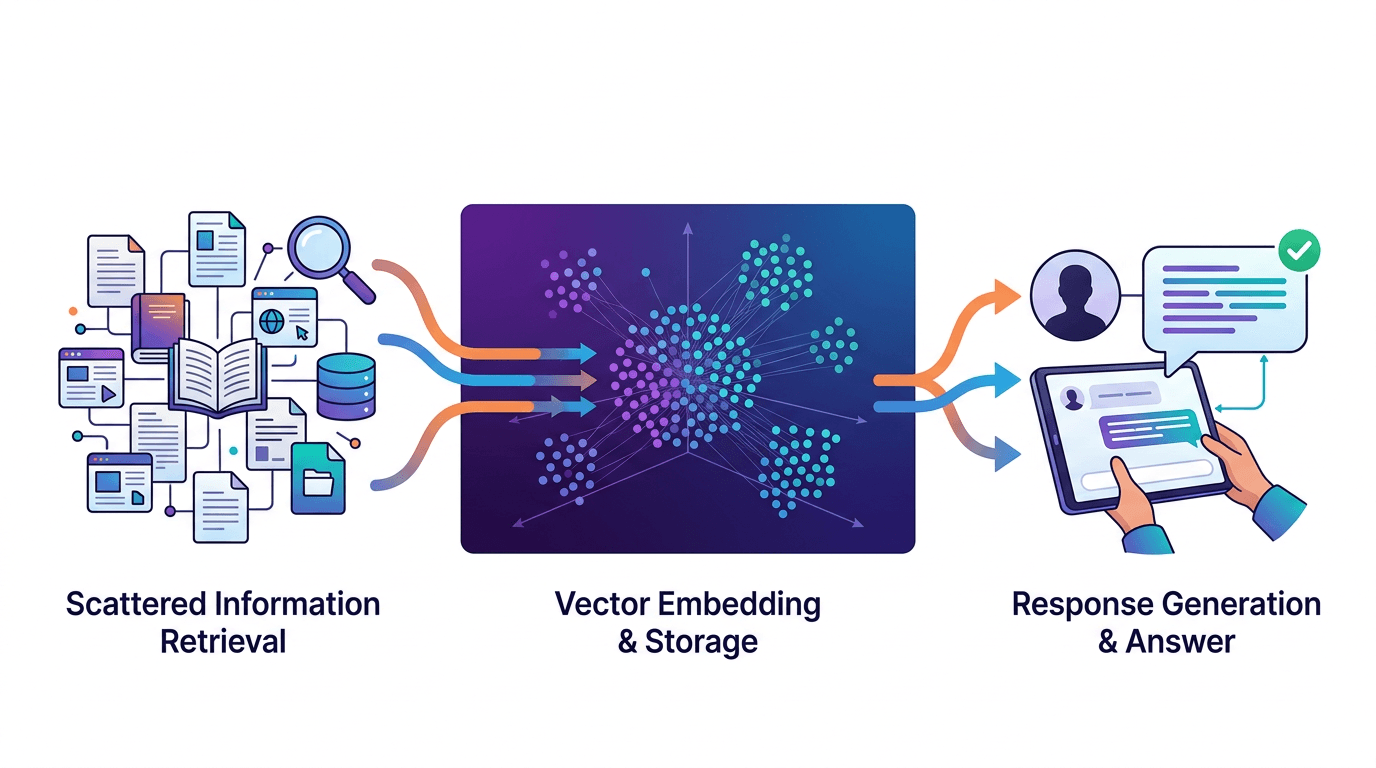
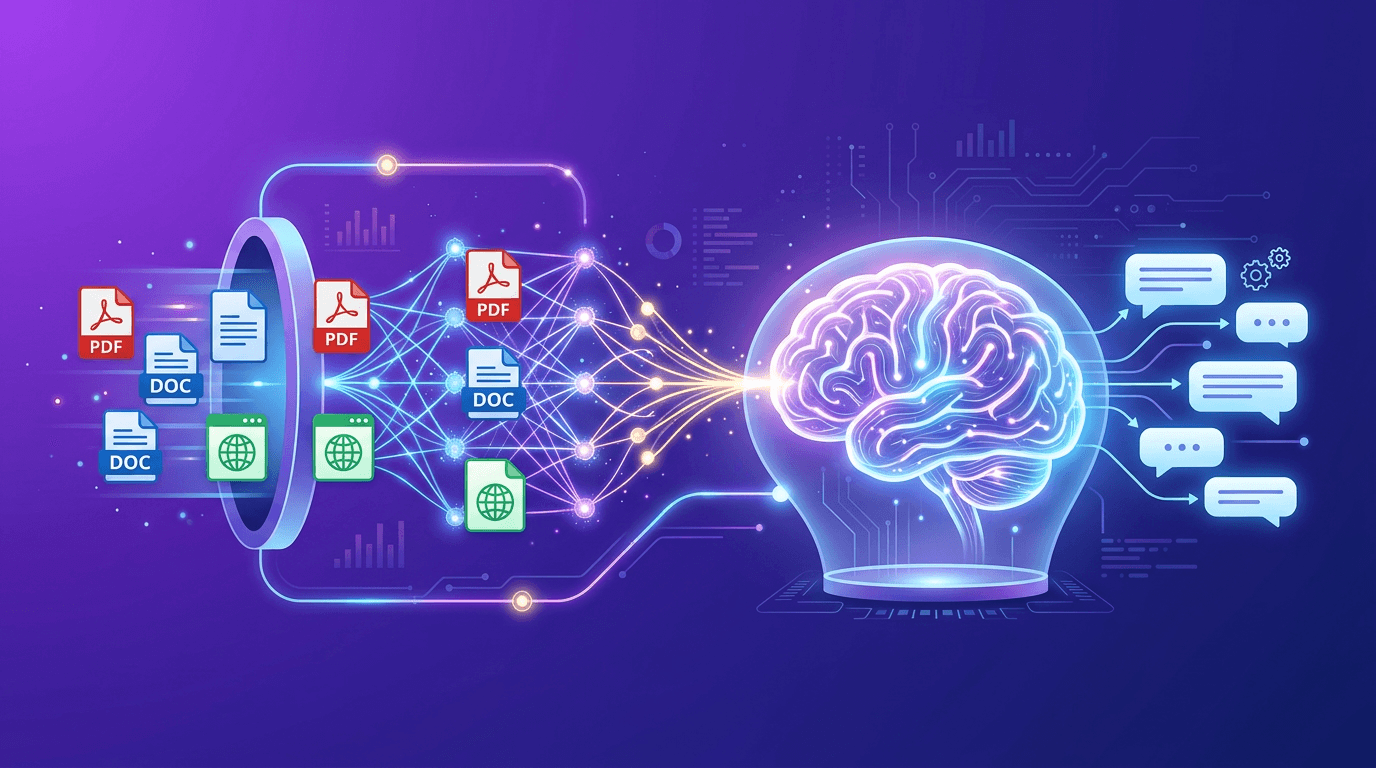
- Trains on your actual content — the chatbot should learn from your website pages and documents, not rely on generic knowledge. See how to train a chatbot on your data.
- Transparent pricing — watch out for hidden costs like branding removal fees, per-message charges that spike unexpectedly, and premium model upsells. Read our pricing comparison for details.
- Easy setup — if it takes more than 15 minutes to get a working chatbot, the platform is overcomplicating things.
- Content moderation — your chatbot represents your brand. Make sure it has guardrails to prevent off-topic or inappropriate responses.
- LLM flexibility — platforms that lock you into a single AI provider put you at risk when that provider has outages or raises prices.
Frequently asked questions
How much can an AI chatbot reduce support costs?
AI chatbots handle interactions at roughly $0.10-0.25 per conversation, compared to $3-12 for human agents. Most businesses see a 30-50% reduction in ticket volume within the first month.
Will customers hate talking to a chatbot?
Modern LLM-powered chatbots are vastly better than the rule-based bots of the past. 82% of consumers prefer getting an instant answer from a chatbot over waiting in a queue for a human agent.
What size business benefits from an AI chatbot?
Businesses of all sizes benefit. Small businesses gain 24/7 coverage they couldn't afford otherwise. Mid-size companies reduce agent workload. Enterprises handle volume that would require massive support teams.
The businesses that win in 2026 aren't the ones with the biggest support teams — they're the ones that use AI to handle the predictable work so their people can focus on what actually matters. Check out our pricing plans to see what it costs to get started.